
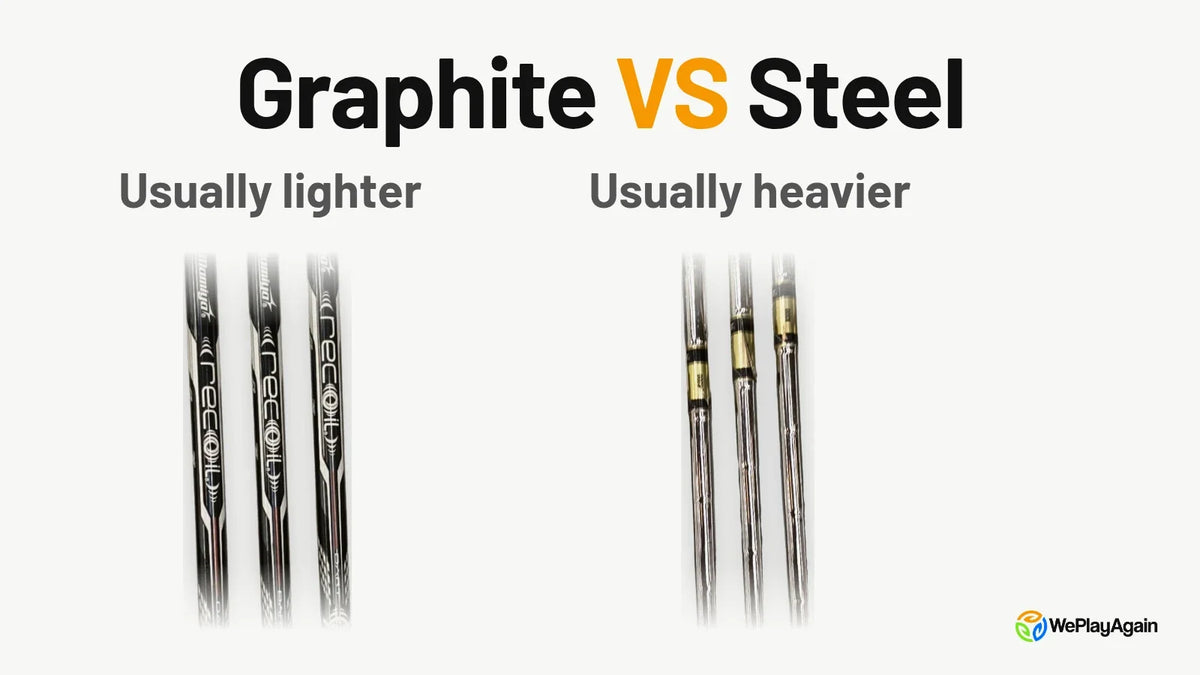
The graphite vs steel shaft choice comes down to weight and feel. Steel shafts are usually heavier, give more feedback and suit faster, controlled swings. Graphite shafts are usually lighter, dampen vibration and suit slower swing speeds or sore joints. The weights overlap, though. So the real choice is weight, flex and launch, not just the material.
Looking at a set of irons and wondering if the shaft material matters? It does, but not always in the way you expect. Here we compare graphite and steel shafts with real weights from the shaft makers. We also show what to check before you buy used iron sets.
What is the difference between graphite and steel shafts?
The main difference between graphite and steel shafts is weight and feel. Steel iron shafts are typically heavier and pass more vibration to your hands. Graphite iron shafts are typically lighter and absorb more of that vibration.
Steel shafts are made from steel alloy and usually have a chrome finish. Graphite shafts are built from layers of carbon fibre and resin. That build lets shaft makers tune weight, flex and launch across a wide range.
The weights overlap more than most golfers think. True Temper's Dynamic Gold 95 steel shaft weighs 96–97 g. UST Mamiya's Recoil Prototype 125 graphite shaft weighs 118–125 g. So a heavy graphite shaft can outweigh a light steel shaft.

Graphite or steel irons: which suits your swing?
Steel irons suit most golfers with a medium to fast, controlled swing. Graphite irons suit slower swing speeds and golfers with sore hands, elbows or shoulders. They also suit golfers who simply want a lighter club.
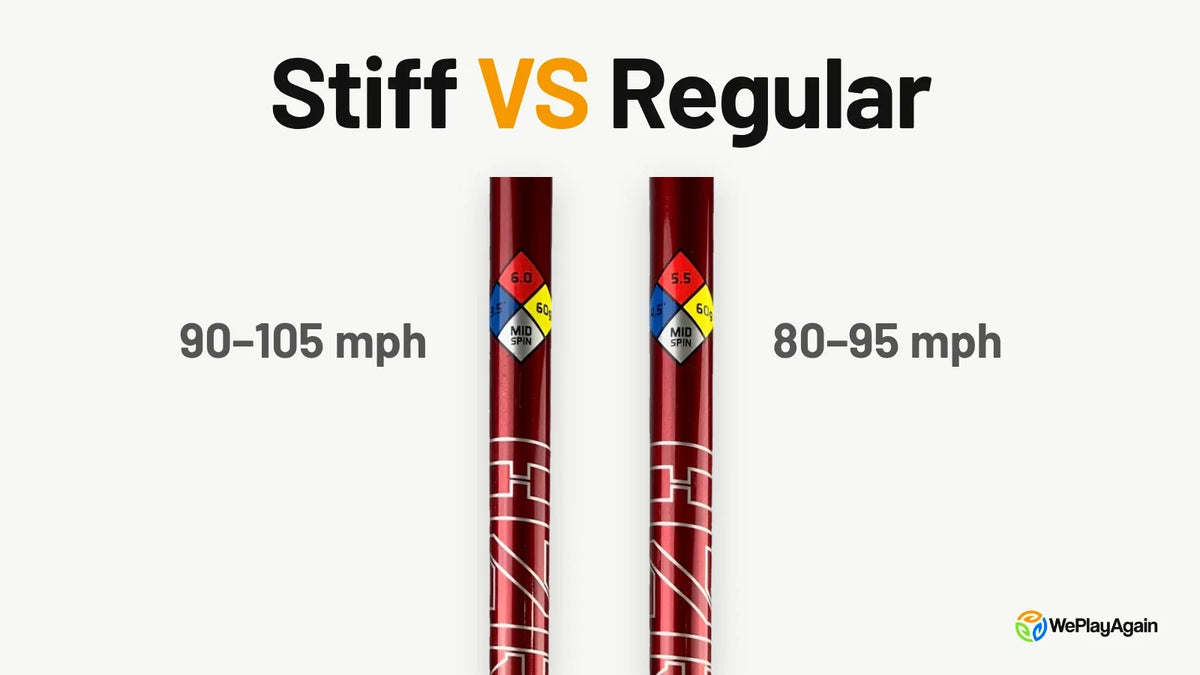
Swing speed (how fast the clubhead moves) is the best place to start. UST Mamiya aims the A-flex Recoil DART 65 at driver swing speeds of 70–85 mph. The R-flex version is aimed at 80–95 mph.
Tempo matters too. Tempo is the rhythm of your swing, not its speed. True Temper rates its shafts for tempo, because tempo affects how you load the shaft. Some golfers with a quick, aggressive transition find that a very light shaft feels loose at the top.
Your joints are the third factor. Graphite dampens the shock from impact more than steel. Some golfers with elbow or wrist trouble notice the difference most on cold days and thin strikes.
Does a graphite shaft give you more distance?
A graphite shaft can give you more distance. That only happens if the lighter weight helps you swing faster and still find the centre of the face. Any extra distance comes from more speed or a higher launch.
A lighter club is easier to speed up. That is why shaft makers build light models in both steel and graphite. True Temper's Dynamic Gold 95 is the lightest shaft in its Dynamic Gold line. True Temper lists it with a high launch.
Distance with irons is also about control. A 7-iron that flies a little further but lands all over the green does not help your score. If a lighter shaft makes your strike less consistent, you lose more than you gain.
Are steel shafts more accurate than graphite?
Steel shafts are not automatically more accurate. Heavier steel shafts help many strong players keep a low, controlled ball flight. Accuracy comes from a shaft that matches your speed and tempo.
True Temper describes Dynamic Gold as a tour-weighted shaft for a penetrating flight and control. The tapered versions weigh 127–132 g and have a low launch. Graphite has moved on, too. UST Mamiya made the Recoil Prototype 125 in stiff and extra stiff flex with a mid-low launch.
Feedback is the real trade-off. Steel passes more vibration to your hands, so you feel a thin or toe strike more clearly. Some golfers want that information. Others prefer the softer feel of graphite.
Graphite vs steel: side-by-side comparison
The table sums up the difference between steel and graphite irons. The weights are examples from the shaft makers, not limits.
| Steel | Graphite | |
|---|---|---|
| Weight (examples) | 96–97 g (Dynamic Gold 95) to 127–132 g (Dynamic Gold, tapered) | 65–66 g (Recoil DART 65 Taper) to 118–125 g (Recoil Prototype 125) |
| Launch (maker's rating) | High (Dynamic Gold 95) to low (Dynamic Gold) | Mid-high (Recoil DART 65 Taper) to mid-low (Recoil Prototype 125) |
| Vibration | Passes more to your hands | Dampens more of it |
| Feedback | Clear feel of each strike | Softer, with less feedback |
| Typical player | Medium to fast, controlled swings | Slower swings, sore joints or a wish for a lighter club |
| Check on used clubs | Rust, dents and worn chrome | Chipped paint, nicks and cracks |
Weights and launch ratings come from the makers: True Temper Dynamic Gold and UST Mamiya Recoil DART 65 Taper. We checked them in November 2026. UST Mamiya has discontinued the Recoil Prototype 125. Older shafts like it can still sit in used irons.
What should you check on used irons with graphite or steel shafts?
Read the shaft label first, then check the condition. The label tells you the model, weight class and flex. Those details matter more than the material.

- Shaft label: The print or band shows the maker, model and flex. Examples are "Dynamic Gold S300" and "Recoil 65 F2". If the label is gone, ask the seller.
- Steel shafts: Look for rust spots, dents and flaking chrome. Look closely near the ferrule (the small ring between shaft and clubhead).
- Graphite shafts: Look for chipped paint, nicks and cracks. A crack or a deep nick in the fibres is a reason to say no.
- The whole set: Check that every iron has the same shaft model and flex. A different shaft in one club can mean the club was replaced.
- Ferrules: Check that each ferrule sits tight against the clubhead and does not turn.
Our advice
Steel or graphite shafts? Choose steel if you swing at medium to high speed, play often and have no joint trouble. If standard steel feels heavy, try a lighter steel shaft. True Temper's Dynamic Gold 105 weighs 101–105 g and has a mid-low launch.
Choose graphite if your long irons struggle to get airborne or your swing speed has dropped. Graphite is also the better choice if your hands and elbows ache after a round. A lighter graphite shaft makes the club easier to swing and gentler on your joints.
Not sure? Hit the same 7-iron head with both shaft types if you can. Look at where you strike the face and how your shots group, not just your longest shot.
FAQ
Can you mix graphite and steel shafts in one bag?
Yes. If you play a graphite driver and steel irons, you already do. You can also put graphite in your longest irons and keep steel in the shorter clubs. Keep the shaft weights in a sensible order, so each club feels like part of the same set.
Do graphite shafts break more easily than steel?
Graphite shafts are built for full swings, but damage matters more on graphite. A deep nick or crack can weaken the fibres, so inspect used graphite closely. Steel is more likely to rust or dent.
Can you reshaft steel irons with graphite?
Yes. A club builder removes the steel shafts and fits graphite shafts with the right tip size. Iron shafts come with a .355" taper tip or a .370" parallel tip. The new shaft must match the clubhead. A lighter shaft also changes the swing weight (how heavy the head feels), which the builder can adjust. You can find used golf shafts in both materials.
Do graphite iron shafts come in stiff flex?
Yes. Graphite iron shafts are made from ladies flex up to extra stiff. UST Mamiya's Recoil range runs from L flex (Recoil DART 55) to X flex (Recoil Prototype 125).
Are graphite irons better for seniors and ladies?
Often, but not always. Graphite is the usual choice for slower swings, because it is lighter and gentler on the joints. A senior or lady golfer with good speed may still prefer steel. Let swing speed decide, not age. If you need a softer flex, look through our ladies iron sets.
Next steps
Start with your swing speed and how your joints feel after a round. Then the choice usually becomes clear. After that, read the shaft label on any set you like, not just the material. If your current irons no longer suit your game, you can sell your old golf clubs to us.

Leave a comment
This site is protected by hCaptcha and the hCaptcha Privacy Policy and Terms of Service apply.